
The insurance industry, traditionally known for its conservative approach and paper-based processes, is undergoing a profound transformation through insurtech innovation. Insurtech—a blend of "insurance" and "technology"—refers to the application of technological innovations to make the insurance industry more efficient, accessible, customer-centric, and risk-aware. From auto insurance quotes to health insurance plans, technology is reshaping every aspect of insurance operations, creating new opportunities for both insurers and policyholders.
The Insurtech Revolution
Insurtech is not just about digitizing existing processes—it's about fundamentally reimagining how insurance works. This revolution is driven by several factors, including changing customer expectations, the availability of vast amounts of data, and the emergence of powerful new technologies. Today's insurance customers expect the same seamless digital experiences they receive in other aspects of their lives, and insurtech is delivering on these expectations.
The impact of insurtech extends across the entire insurance value chain, from product development and underwriting to claims processing and customer service. For example, home insurance quotes that once required lengthy phone calls and paperwork can now be generated in minutes through AI-powered platforms. Similarly, life insurance quotes can be personalized based on data from wearable devices and health apps, creating more accurate risk assessments and fairer pricing.

Four key areas where digital transformation is impacting the insurance industry
Key Technologies Driving Insurtech Innovation
Several technologies are at the forefront of the insurtech revolution:
Artificial Intelligence and Machine Learning: These technologies enable personalized product recommendations, automated underwriting, and predictive analytics for risk assessment across all insurance types, from term life insurance to flood insurance.
Internet of Things (IoT): Connected devices are providing real-time data for usage-based insurance models, particularly in auto insurance quotes and health insurance plans.
Blockchain: Distributed ledger technology is being used to create smart contracts for insurance policies, automate claims processing, and enhance transparency in reinsurance markets.
Cloud Computing: Cloud platforms provide the scalability and flexibility needed for modern insurance operations, enabling rapid deployment of new products and services.
Big Data Analytics: Advanced analytics are transforming how insurers assess risk, price policies, and personalize customer experiences.
Transforming Insurance Products and Services
Insurtech innovation is reshaping insurance products and services across virtually every segment:
In property and casualty insurance, telematics devices and smartphone apps are enabling usage-based insurance models where premiums reflect actual usage and behavior. This applies to auto insurance quotes, motorcycle insurance, and even RV insurance. Smart home devices are transforming home insurance quotes by providing real-time data on potential risks like water leaks, fire hazards, or security breaches.
Health insurance is being revolutionized through wearable devices, telemedicine platforms, and AI-powered wellness programs. These technologies enable more personalized health insurance plans, from individual health insurance to family health insurance, and specialized offerings like Medicare Advantage and short-term health insurance.
Life insurance is becoming more accessible through digital underwriting processes that leverage AI and big data. This has led to innovations like no medical exam life insurance and more accurate pricing for whole life insurance and universal life insurance.
Business insurance is also being transformed through insurtech. Digital platforms are streamlining the management of complex insurance portfolios, including commercial auto insurance, general liability insurance, and workers' compensation insurance. Specialized products like cyber liability insurance and professional liability insurance are being enhanced through AI-driven risk assessment tools.
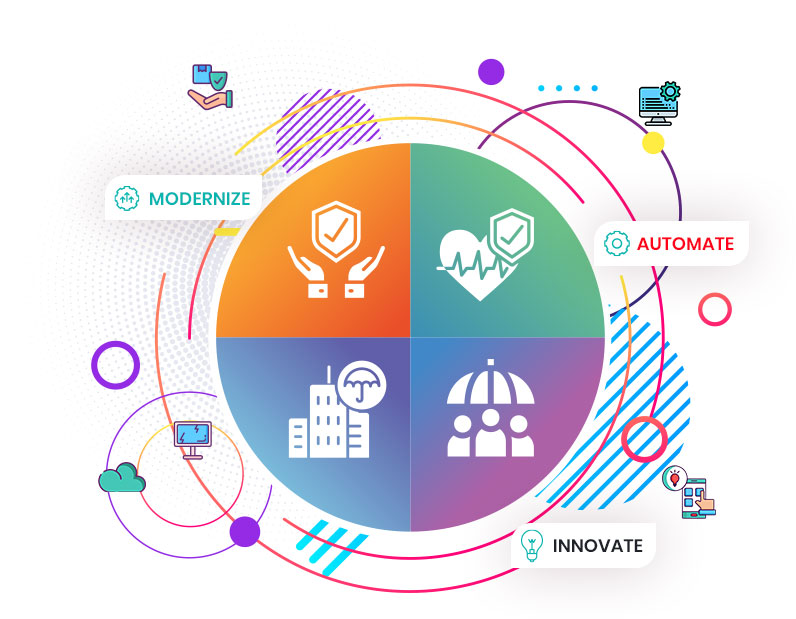
Four core areas where technology is transforming modern insurance
Enhancing the Customer Experience
One of the most significant impacts of insurtech is the transformation of the customer experience. Digital platforms are making insurance more accessible, transparent, and user-friendly. Customers can now research, purchase, and manage policies online, often through mobile apps that provide 24/7 access to their insurance information.
Claims processing, once a lengthy and often frustrating process, has been streamlined through technology. Computer vision algorithms can assess vehicle damage from photos, while natural language processing can extract relevant information from claim documents. This results in faster payouts and greater transparency for customers filing claims for everything from travel insurance to pet insurance.
Personalization has reached new heights with AI-driven recommendation engines that suggest appropriate coverage based on a customer's specific needs and life stage. Whether it's landlord insurance for a new property owner or disability insurance for a young professional, insurtech ensures customers receive relevant offers at the right time.
The Future of Insurtech
As insurtech continues to evolve, several trends are shaping the future of the industry:
Embedded Insurance: Insurance will be increasingly integrated into other products and services, offering coverage at the point of need rather than as a separate purchase.
Hyper-Personalization: AI will enable truly individualized insurance products that adapt to changing circumstances in real-time.
Voice and Conversational Interfaces: Natural language processing will enable customers to manage their policies through voice commands and chat conversations.
Predictive Claims Management: Insurers will use AI to predict potential claims before they occur, enabling proactive risk mitigation.
Climate Risk Technology: Advanced modeling and satellite imagery will improve assessment and pricing of climate-related risks for flood insurance and earthquake insurance.
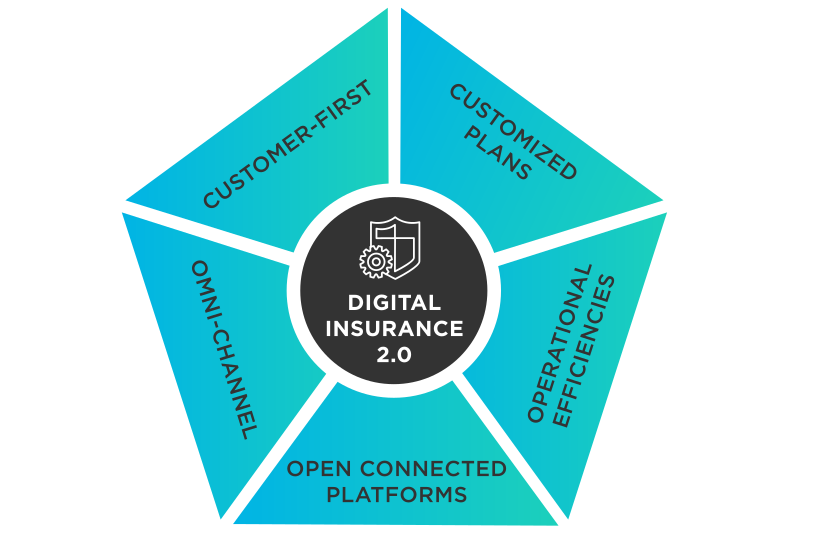
Five key elements defining the future of digital insurance
Challenges and Considerations
While insurtech offers tremendous opportunities, it also presents challenges. Insurers must navigate complex regulatory environments, address cybersecurity concerns, and manage the cultural shift required to become truly digital organizations. They must also ensure that technological innovation doesn't exclude customers who prefer traditional channels or have limited digital access.
Privacy concerns are particularly significant as insurers collect and analyze increasing amounts of personal data. Balancing personalization with privacy will be crucial for maintaining customer trust, especially for sensitive products like long-term care insurance and critical illness insurance.
Conclusion
Insurtech is not just changing how insurance is sold and managed—it's redefining what insurance can be. From umbrella insurance to wedding insurance, technological innovations are creating more responsive, personalized, and valuable insurance experiences. The insurers who embrace this transformation, focusing on customer needs while leveraging new technologies, will be best positioned to thrive in the evolving insurance landscape.
As we look to the future, the line between insurance and other services will continue to blur, creating new opportunities for innovation and value creation. The most successful insurers will be those that view technology not as a replacement for human expertise but as a tool to enhance it, creating a more efficient, accessible, and customer-centric insurance industry for all.