
In today's digital-first world, customer experience has become a critical differentiator in the insurance industry. Traditional insurance models, characterized by lengthy paperwork, in-person meetings, and slow response times, are being replaced by digital solutions that offer convenience, speed, and personalization. From auto insurance quotes to health insurance plans, digital transformation is fundamentally changing how customers interact with insurance providers, creating new expectations and opportunities for both insurers and policyholders.
The Digital Customer Experience Imperative
The importance of digital customer experience in insurance cannot be overstated. Research shows that 80% of insurance shoppers touch a digital channel during their purchase journey, making digital customer experience an imperative for insurers. Today's customers expect the same seamless, intuitive digital experiences they receive in other aspects of their lives, and they're increasingly choosing insurance providers who can deliver on these expectations.
Digital transformation in insurance refers to the process of implementing cutting-edge technologies to improve every aspect of insurance companies, with a particular focus on enhancing customer experience. This transformation is driven by changing customer expectations, competitive pressure from insurtech startups, and the potential for significant operational efficiencies.
For insurance customers, digital solutions mean the ability to research, purchase, and manage policies online, often through mobile apps that provide 24/7 access to their insurance information. Whether they're looking for home insurance quotes, managing life insurance quotes, or filing a claim for travel insurance, customers now expect digital-first experiences that are fast, convenient, and personalized.
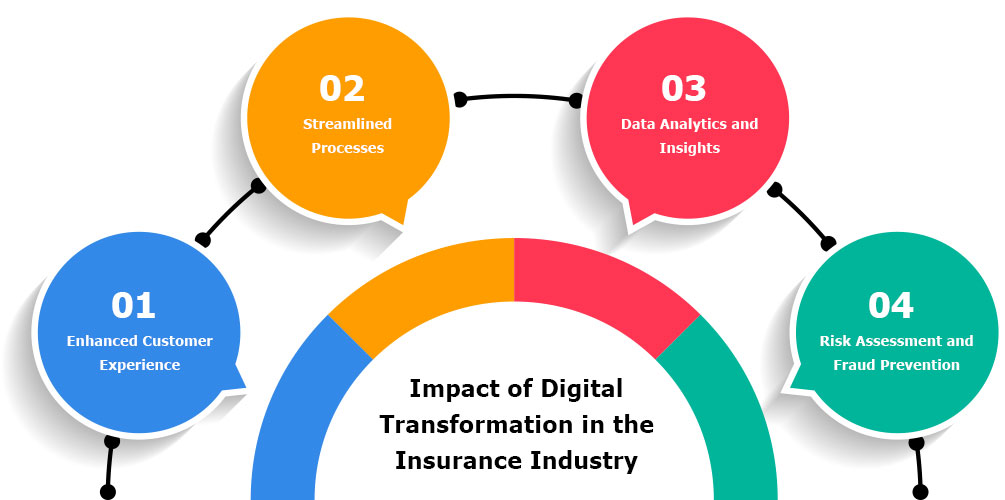
Four key areas where digital transformation is impacting the insurance industry
Key Digital Solutions Transforming Customer Experience
Several digital solutions are at the forefront of transforming customer experience in insurance:
Mobile Applications: Insurance apps allow customers to manage policies, file claims, and access documents from anywhere, at any time. These apps often include features like digital ID cards, claim status tracking, and even AI-powered assistance.
AI-Powered Chatbots: Intelligent virtual assistants provide instant responses to customer inquiries, available 24/7 to answer questions about business insurance, renters insurance, or any other insurance product.
Self-Service Portals: Online portals empower customers to manage their insurance needs independently, from updating coverage to making payments, without needing to contact an agent.
Digital Claims Processing: Computer vision and AI enable customers to submit claims by simply uploading photos of damage, with automated assessment and faster payouts.
Personalized Communication: Data analytics enables insurers to send personalized recommendations and alerts based on customer behavior and life events.
Personalization Through Digital Solutions
One of the most significant benefits of digital solutions in insurance is the ability to deliver personalized experiences at scale. Through data analytics and AI, insurers can understand individual customer needs and preferences, tailoring products and services accordingly.
For example, a customer with pet insurance might receive personalized reminders about preventive care based on their pet's breed and age. A homeowner with flood insurance might receive early warnings about potential weather events in their area, along with tips on how to protect their property.
Digital solutions also enable more accurate and personalized pricing. Usage-based insurance models, powered by telematics data, allow auto insurance quotes to reflect actual driving behavior rather than demographic averages. Similarly, health insurance plans can be personalized based on wearable device data and health metrics, creating more accurate risk assessments and fairer pricing.
For businesses, digital platforms provide personalized recommendations for commercial auto insurance, general liability insurance, and workers' compensation insurance based on industry-specific risks and operational data.
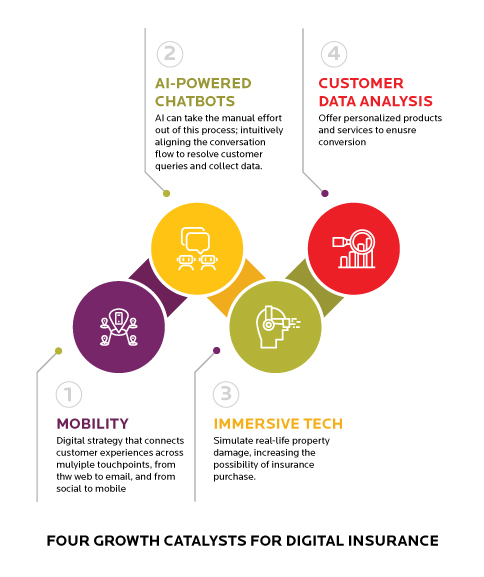
Four key growth catalysts driving digital transformation in insurance
Omnichannel Experience
Modern insurance customers expect seamless experiences across all channels, whether they're interacting online, through a mobile app, or with a human agent. Digital solutions enable insurers to provide a simplified omnichannel experience, with efficient, coordinated digital solutions that ensure consistency across all touchpoints.
An omnichannel approach means that a customer who starts researching motorcycle insurance online can seamlessly transition to speaking with an agent without having to repeat information. It means that a claim filed through a mobile app can be tracked through a web portal or by phone, with consistent information available across all channels.
This coordinated approach is particularly important for complex insurance products like cyber liability insurance or professional liability insurance, where customers may need to interact with multiple departments or specialists throughout their insurance journey.
Streamlining Claims Processing
Claims processing has traditionally been one of the most frustrating aspects of the insurance customer experience. Digital solutions are transforming this process, making it faster, more transparent, and more convenient for customers.
Computer vision algorithms can assess vehicle damage from photos, while natural language processing can extract relevant information from claim documents. This automation reduces processing time and minimizes the need for customers to provide extensive documentation.
For disability insurance claims, digital platforms can streamline the submission of medical records and track claim status in real-time. For property insurance claims, drones and satellite imagery can assess damage without requiring an in-person inspection, speeding up the assessment process.
Digital claims processing also provides greater transparency, with customers able to track the status of their claims in real-time and receive updates at each stage of the process. This transparency builds trust and reduces customer anxiety during what is often a stressful time.
Benefits for Customers and Insurers
The digital transformation of customer experience in insurance creates significant benefits for both customers and insurers:
For Customers: Greater convenience, faster service, more personalized products, and greater transparency throughout the insurance journey.
For Insurers: Increased customer satisfaction and loyalty, reduced operational costs, improved efficiency, and the ability to gather valuable customer insights.
For the Industry: Greater innovation, more competitive pricing, and a more customer-centric approach to insurance products and services.

Six steps to create an effective customer journey map in the insurance industry
Challenges and Considerations
While digital solutions offer tremendous opportunities for improving customer experience, they also present challenges. Insurers must ensure that digital transformation doesn't exclude customers who prefer traditional channels or have limited digital access. This requires maintaining a balance between digital innovation and human touch.
Data privacy and security are also significant concerns, as digital solutions involve collecting and processing large amounts of personal information. Insurers must implement robust security measures and be transparent about how customer data is used to maintain trust.
Additionally, digital transformation requires significant investment in technology and training. Insurers must ensure their employees have the skills and tools needed to deliver excellent digital customer experiences, while also maintaining the human expertise that remains crucial for complex insurance products and situations.
The Future of Customer Experience in Insurance
As technology continues to evolve, the future of customer experience in insurance will be characterized by even greater personalization, convenience, and integration. We can expect to see more AI-powered solutions that anticipate customer needs, more embedded insurance offerings that integrate coverage into other products and services, and more voice and conversational interfaces that make managing insurance as simple as having a conversation.
The insurers who succeed in this new landscape will be those who view digital transformation not as a replacement for human interaction but as a way to enhance it. By combining the efficiency and convenience of digital solutions with the empathy and expertise of human agents, insurers can create customer experiences that are not only efficient but also genuinely helpful and reassuring.
Ultimately, the goal of digital transformation in insurance is not just to digitize existing processes but to reimagine the entire customer experience, creating insurance products and services that are more accessible, transparent, and valuable to customers' lives. From umbrella insurance to wedding insurance, digital solutions are transforming every aspect of insurance, creating a more customer-centric industry that is better equipped to meet the evolving needs of modern consumers.