
The insurance industry is undergoing a remarkable transformation in how claims are processed, with automation and artificial intelligence at the forefront of this evolution. Traditional claims processing, often characterized by lengthy paperwork, manual reviews, and extended settlement times, is being replaced by automated systems that can process claims in minutes rather than weeks. This revolution is not just improving efficiency—it's fundamentally changing the customer experience and creating new opportunities for insurers across all product lines, from auto insurance quotes to health insurance plans.
The Automation Revolution in Claims Processing
Automated claims processing uses technology to expedite the claims process from submission to settlement, reducing processing times and errors. This transformation is driven by several technologies working in concert to create a seamless, efficient claims experience. For insurers, the benefits are significant: reduced operational costs, improved accuracy, and enhanced fraud detection capabilities. For customers, it means faster settlements, greater transparency, and a less stressful claims experience.
The impact of automation extends across all insurance segments. In property and casualty insurance, automated systems can assess vehicle damage from photos, process home insurance quotes claims, and even predict the likelihood of claims based on weather patterns. In health insurance, automation streamlines the submission and processing of medical claims, reducing the administrative burden on healthcare providers and patients alike.

Comparison of traditional and automated claims processing workflows
Key Technologies Driving Claims Automation
Several technologies are at the core of automated claims processing:
Artificial Intelligence and Machine Learning: AI algorithms can analyze claim data, identify patterns, and make decisions about claim validity and settlement amounts. Machine learning models improve over time, becoming more accurate with each processed claim.
Computer Vision: This technology enables automated assessment of damage from photos and videos, particularly valuable for auto insurance quotes and property claims.
Natural Language Processing: NLP can extract relevant information from claim documents, medical records, and adjuster notes, reducing manual data entry.
Robotic Process Automation (RPA): RPA bots handle repetitive tasks like data entry, document routing, and status updates, freeing human adjusters to focus on complex claims.
Predictive Analytics: These tools can forecast claim costs, identify potential fraud, and even predict which claims might require additional investigation.
Applications Across Insurance Types
Automated claims processing is transforming claims handling across virtually all insurance segments:
In auto insurance quotes and claims, computer vision can assess vehicle damage from photos submitted via mobile apps, while telematics data can verify accident circumstances. This enables faster processing of claims for everything from minor fender benders to major collisions.
For property insurance, automated systems can analyze satellite imagery and weather data to assess damage from natural disasters, expediting claims for flood insurance and earthquake insurance. Smart home devices can provide real-time alerts about potential issues, enabling proactive claims initiation.
Health insurance claims benefit significantly from automation, with AI systems processing medical claims, verifying coverage, and detecting billing errors. This applies to individual health insurance, family health insurance, and specialized plans like Medicare Advantage.
Business insurance claims, including commercial auto insurance, general liability insurance, and workers' compensation insurance, are being streamlined through automated document processing and intelligent routing to the appropriate specialists.
Even specialized insurance products like pet insurance, travel insurance, and cyber liability insurance are benefiting from automated claims processing, with tailored solutions for their unique claim types.
Enhancing the Customer Experience
One of the most significant benefits of automated claims processing is the dramatic improvement in customer experience. Traditional claims processing often involved lengthy waits, multiple contacts with adjusters, and uncertainty about claim status. Automated systems transform this experience in several ways:
Speed: What once took weeks can now be accomplished in minutes or hours. Simple claims can be processed automatically with instant settlements, while complex claims are routed to the appropriate specialists with all necessary information pre-processed.
Transparency: Customers can track their claim status in real-time through mobile apps or web portals, receiving updates at each stage of the process. This transparency reduces anxiety and builds trust.
Convenience: Mobile-first claims experiences allow customers to submit claims, upload documentation, and communicate with adjusters from anywhere, at any time. This is particularly valuable for travel insurance claims when customers are away from home.
Accuracy: Automated systems reduce human error in claims processing, ensuring consistent application of policy terms and fair settlement amounts.
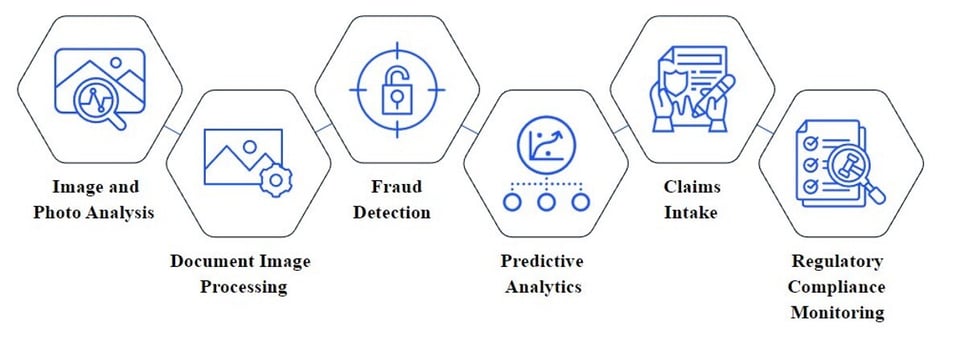
Key components of an AI-powered claims processing workflow
Fraud Detection and Prevention
Automated claims processing significantly enhances fraud detection capabilities, benefiting both insurers and honest policyholders. AI systems can analyze millions of claims to identify patterns indicative of fraud, flagging suspicious claims for further investigation.
These systems can detect sophisticated fraud schemes that might escape human notice, such as coordinated fraud rings or unusual patterns across seemingly unrelated claims. This not only reduces losses for insurers but also helps keep premiums lower for all policyholders.
For disability insurance and workers' compensation insurance, automated systems can cross-reference claims with employment records, social media activity, and other data sources to verify claim validity.
Benefits for Insurers
While customer experience improvements are significant, insurers also benefit tremendously from automated claims processing:
Operational Efficiency: Automation reduces the need for manual data entry and routine processing, allowing adjusters to focus on complex claims that require human expertise.
Cost Reduction: Faster processing times and reduced manual intervention significantly lower operational costs.
Improved Accuracy: Automated systems apply policy terms consistently, reducing errors and potential disputes.
Better Risk Management: Data collected through automated processing provides valuable insights for underwriting and risk assessment.
Competitive Advantage: Insurers with efficient claims processing can differentiate themselves in the market, attracting and retaining more customers.
Challenges and Considerations
Despite its many benefits, implementing automated claims processing presents several challenges:
Integration with Legacy Systems: Many insurers operate on legacy systems that weren't designed for modern automation technologies, requiring significant investment in system upgrades or replacements.
Data Quality and Availability: Automated systems rely on high-quality data to function effectively. Insurers must ensure they have access to accurate, comprehensive data from various sources.
Regulatory Compliance: Insurance is heavily regulated, and automated systems must comply with all relevant regulations while maintaining transparency in decision-making.
Balancing Automation and Human Touch: While automation can handle many claims efficiently, complex or sensitive claims still require human empathy and judgment. Insurers must determine the right balance between automation and human intervention.
Customer Trust: Some customers may be skeptical of automated decisions, particularly for claim denials or reduced settlements. Insurers must ensure their automated systems are fair, transparent, and provide clear explanations for decisions.
The Future of Automated Claims Processing
As technology continues to evolve, the future of automated claims processing will be characterized by even greater speed, accuracy, and personalization. We can expect to see more advanced AI systems that can handle increasingly complex claims, greater integration with IoT devices for real-time damage assessment, and more predictive capabilities that anticipate claims before they're even filed.
Generative AI is already beginning to transform claims processing further, with systems that can generate personalized communications, explain complex policy terms in plain language, and even negotiate settlements in certain cases.
For insurers, the message is clear: automated claims processing is no longer a luxury but a necessity in today's competitive landscape. Those who embrace this transformation will be best positioned to meet customer expectations, control costs, and thrive in the evolving insurance industry. From umbrella insurance to wedding insurance, automated claims processing is creating faster, smarter, and more satisfying insurance experiences for everyone involved.